

Current Insights






Back number
JFIR Commentary
"JFIR Commentary" introduces news analyses and opinions in Japan on Japan's position in the international community, but they do not represent the views of JFIR as an institution.
October 05,2026
Examining China’s Revised National Defense Mobilization Law
I. Beyond Military Contingencies: Building a Framework for Comprehensive National Security On October 1, 2026, China implemented its revised National Defense Mobilization Law (comprising 14 chapters and 82 articles). The law, which was significantly overhauled from its 2010 predecessor (14 chapters and 72 articles), was adopted on August 28, 2026, by the Standing Committee of the National People’s Congress (NPC, China’s legislative body). Article 2, which defines “national defense mobilization,” explicitly adds “development interests” to the list of core interests to be defended against threats, alongside “national sovereignty, unity, territorial integrity, and security,” which were stipulated in the previous law. Under the revised law, the scope of national defense mobilization has been expanded to encompass responses to economic decoupling, economic sanctions, and the protection of overseas assets, advanced technologies, and data. The framework has thus been broadened to prepare for comprehensive national security—covering not only military contingencies involving Taiwan, Japan, or the Philippines, but also economic security frictions stemming from Western de-risking strategies. Furthermore, by defining national defense mobilization as activities that “guarantee a rapid transition between peacetime and wartime, converting overall economic and social strength into national defense capability,” the law represents a major institutional shift. This shift poses direct risks to the business continuity and data management of foreign enterprises operating in China—not only during contingencies, but also in peacetime. II. Key Elements of the Revision This section examines the principal revisions introduced in the revised National Defense Mobilization Law. Chapter 1: General Provisions — Explicit Inclusion of “Development Interests,” “Military-Locality Coordination,” and “Emerging Domains” “Development interests” are explicitly included among the core interests to be defended against threats (Article 2), enabling the law to apply not only to armed conflicts but also to “gray-zone situations” falling short of military clashes, such as supply chain disruptions, economic sanctions, and cyberattacks. The law aims to enhance the level of informatization and artificial intelligence (AI) in national defense mobilization, consolidating and elevating an integrated national strategic system and capabilities (Article 4), while promoting the application of advanced technologies to develop mobilization capabilities in “emerging domains” (Article 8). Consequently, this revised law extends its scope to a broad spectrum of modern warfare, including the cyber and AI domains. Regarding national defense mobilization, principles such as “upholding the leadership of the Communist Party of China” and “adhering to the integration of peacetime and wartime, military-locality coordination, and Military-Civil Fusion” are explicitly set forth (Article 3). The law introduces a “target responsibility system for national defense mobilization work” to strengthen supervision and inspection over relevant departments of central state organs, local people’s governments at all levels, and relevant military organs (Article 5). Furthermore, the state will establish a “verification and evaluation mechanism for mobilization capabilities” (Article 6) and a data service support system to collect, use, and secure data closely related to mobilization (Article 7). Expenditures required for mobilization shall, in principle, be shared based on the division of fiscal responsibilities between the central and local governments (Article 9). Information acquired in the course of national defense mobilization work is subject to confidentiality obligations covering not only state secrets, but also work-related secrets, trade secrets, personal privacy, and personal information. The leakage or unauthorized provision of such information is strictly prohibited (Article 11). Chapter 3: National Defense Mobilization Plans, Implementation Preparation Plans, and Mobilization Potential Statistical Surveys Preparations for national defense mobilization are integrated into the economic and social development plans of provincial and county-level governments, while implementation preparation plans are incorporated into military operational readiness plans (Articles 20–25). Regarding mobilization potential, the state incorporates defense mobilization potential into the government statistical survey system to enhance its analysis and utilization (Article 26). Chapter 4: Projects and Key Products Closely Related to National Defense To promote the “coordinated development of economic construction and national defense construction”—namely Military-Civil Fusion (Article 27)—a catalog of projects and key products closely related to national defense shall be jointly formulated by the development and reform department under the State Council and relevant departments of the Central Military Commission (CMC), subject to approval by the State Council and the CMC (Article 28). Listed projects and key products must adhere to national defense standards and technical specifications across design, production, construction, supervision, acceptance inspection, and maintenance, while prioritizing the adoption of advanced and applicable civilian standards and technical specifications. Chapter 7: Scientific Research, Production, and Maintenance Support for Military Products Relevant departments of the State Council and the Central Military Commission (CMC) shall organize and conduct security evaluations of the industrial and supply chains for military products, enhancing their resilience and security levels (Article 46). Governments and military organs at all levels shall promote the commonality, serialization, and modularization of military products; foster the socialization of maintenance support for military products; support and assist in the development and application of advanced dual-use technologies and equipment; elevate the level of commonality between military and civilian standards; and improve comprehensive capabilities for scientific research, production conversion, production expansion, and maintenance support for military products (Article 48). Chapter 9: National Defense Duty National defense duties are defined as tasks that support and guarantee military operations, prevent and relieve war damage, and assist in maintaining social order (Article 57). Chinese citizens (males aged 18–60 and females aged 18–55) are obligated to perform national defense duties. In addition to the urban infrastructure and key sectors specified under the previous law—such as transportation, postal services, telecommunications, healthcare, food supply, energy, news media, and defense research and production—the revised law explicitly imposes obligations on cybersecurity-related enterprises (Articles 58–60). Because national defense duties apply exclusively to Chinese citizens, Japanese expatriates and other foreign nationals are not subject to individual mobilization. Chapter 10: Expropriation, Requisition, and Compensation of Civilian Resources (formerly “Requisition and Compensation of Civilian Resources”) During national defense mobilization, if reserve materials are insufficient, the government may expropriate, requisition, or militarily modify civilian facilities, equipment, means of transportation, and venues (Article 63). While personal and household necessities and residences are exempt (Article 65), all organizations and individuals are obliged to comply with the expropriation and requisition of civilian resources required by the military, the People’s Armed Police, or the militia (Article 64). Thus, even if foreign individuals (such as Japanese expatriates) are exempt, local legal entities (foreign enterprise subsidiaries) remain subject to expropriation, requisition, and associated legal penalties. A critical point of this chapter for Japanese and other foreign enterprises is that while the previous law only stipulated “requisition” (implying temporary use, return, and compensation), the revised law explicitly adds “expropriation” (involving the transfer of ownership without the premise of return). Although Article 67 provides for “fair and reasonable compensation” for requisitioned resources, the explicit inclusion of expropriation introduces a distinct risk of permanent asset loss. Chapter 11: Publicity and Education The revised law newly stipulates that, upon a decision to execute national defense mobilization, relevant departments and organs of the central government, local governments, and the military shall standardize the order of information release and dissemination, and handle, in accordance with the law, organizations or individuals that disrupt or sabotage mobilization through disinformation (Article 72). This establishes a framework for rigorous information control and the shaping of state propaganda. Chapter 13: Legal Liabilities Article 78 stipulates individual violations and penalties, covering acts such as refusing or delaying the provision of data on defense mobilization potential, refusing the expropriation or requisition of civilian resources, obstructing modifications to requisitioned resources, fabricating or spreading mobilization disinformation, and disrupting or sabotaging the order of national defense mobilization work. Article 79 outlines violations and penalties for enterprises and organizations, specifying acts such as refusing or delaying the provision of data on mobilization potential, failing to execute contracted projects implementing national defense requirements, failing to fulfill duties regarding strategic material stockpiling and allocation, failing to perform tasks related to scientific research, production conversion, production expansion, and maintenance support for military products, refusing or delaying military procurement, and refusing or delaying the expropriation or requisition of civilian resources. III. The Revised Law: Integrating “Peacetime Monitoring and Tracking” into the “Wartime Mobilization Foundation” This revision of the National Defense Mobilization Law was undertaken to eliminate inconsistencies among the national security legal frameworks developed under the Xi Jinping administration, forming part of an effort to enable physical enforcement, coercion, and seizure not only during contingencies but also in peacetime. The National Security Law enacted in 2015 was grounded in the “Overall National Security Concept” proposed in 2014—a governing philosophy that prioritizes the maintenance of Communist Party of China (CPC) rule and political security, while encompassing political, economic, military, social, and cyber domains to safeguard national security. Similarly, the “Military Strategic Guidelines for a New Era” released in 2019 outlined a comprehensive security approach incorporating the economic, technological, and data domains, aiming to deepen joint operational capabilities to adapt to modern warfare evolving with informatization and artificial intelligence (AI). Furthermore, provisions authorizing defense mobilization when “development interests” are threatened—in addition to national sovereignty and territorial integrity—had already been incorporated into the 2020 revision of the National Defense Law. Regarding peacetime information gathering, a series of legislative measures have been enacted: – the Counter-Espionage Law in 2014 (targeting state secrets and intelligence gathering); – the National Intelligence Law in 2017 (mandating cooperation with state intelligence work from organizations and individuals, both domestic and overseas); – the Cybersecurity Law in 2017 (introducing data localization and codifying cybersecurity protection); – the Data Security Law in 2021 (prohibiting domestic and cross-border data processing and transfers that harm China’s national security and interests); – the revised Counter-Espionage Law in 2023 (expanding the scope of espionage to include the theft or provision of documents, data, materials, and items concerning national security and interests, as well as cyberattacks); – the revised Law on Guarding State Secrets in 2024 (extending protected information to “work secrets” and enabling administrative departments to independently designate secrecy levels); and – the revised Cybersecurity Law in 2026 (strengthening penalties, introducing new AI-related provisions, and extending coverage to extraterritorial organizations and individuals). The revised National Defense Mobilization Law does not merely alter wartime rules; through the “rapid transition between peacetime and wartime,” it enables the physical seizure, requisition, and operationalization of human, material, and information resources tracked under a series of national security laws. For Japanese enterprises, this implies that mobilization will not begin abruptly during a crisis. Rather, cooperation in peacetime—including information provision, data integration, mobilization potential surveys, and stockpiling—is already mandatory, effectively incorporating foreign corporate entities into China’s mobilization foundation for contingencies.
September 01,2026
WPS Opens New Horizons for Japanese Diplomacy: Toward “Dignified Japanese Diplomacy”
The year 2025 marked the 25th anniversary of the adoption of United Nations Security Council Resolution 1325. Over the past quarter-century, Women, Peace and Security (WPS) has developed significantly as an international norm promoting the protection of women in conflict and their participation in decision-making. Today, its significance is expanding further, as WPS is evolving into a policy concept that calls for reconsidering the very nature of security itself. Since 2025, the Japan Forum on International Relations has been conducting the Study Group for Applying Japan’s Strengths to Further the WPS Agenda with grant support from the Ministry of Foreign Affairs of Japan. Through sustained dialogue with researchers, practitioners, and civil society actors in Japan and abroad, as well as overseas research institutions, the study group has examined the distinctive characteristics of Japan’s approach to WPS and its future direction. Its work has included a systematic analysis of Japan’s three National Action Plans (NAPs), comparative research with European and North American countries, and discussions on increasingly important issues such as Technology-Facilitated Gender-Based Violence (TFGBV) in the digital sphere and cognitive warfare. Through these multifaceted inquiries, one conviction has emerged. WPS is no longer merely one field of “women’s policy.” The security environment today differs markedly from that of a quarter-century ago. Russia’s aggression against Ukraine has once again brought the reality of interstate war into sharp relief. At the same time, the front lines of security have expanded into society itself, encompassing disinformation and cognitive warfare, the rapid development of artificial intelligence, information manipulation in cyberspace, and online harassment. As the information environment underpinning democracy becomes increasingly unstable and social divisions deepen, the participation and resilience of diverse actors, including women, young people, and civil society, have become essential elements supporting national security itself. In this new era, WPS should therefore be repositioned not as a policy for “protecting women,” but as a national strategy for strengthening the resilience of society as a whole. Japan’s approach to WPS possesses distinctive strengths that can respond to this changing environment. Japan has long embraced human security as a principle of its diplomacy, pursuing policies that protect the dignity of every individual through disaster risk reduction, education, health, development cooperation, and the inclusion of local communities. Japan’s First National Action Plan established the conceptual foundations of its WPS policy, the Second advanced its institutionalization, and the Third broadened its scope. In this way, Japan’s approach to WPS has developed along its own trajectory while remaining rooted in the principle of human security. The Fourth National Action Plan, however, must go a step further. Responses to TFGBV, cognitive warfare and disinformation, gender-related challenges in the AI-driven information environment, and the strategic resilience of democracy and social trust should be positioned as core elements of the WPS agenda. Ultimately, this would be an effort to adapt human security, a guiding principle of Japanese diplomacy, to the security environment of the Reiwa era. As this research progressed, it also prompted me to reconsider the nature of diplomacy itself. At an open class held at Utsunomiya University last November as part of the WPS Special Colloquium, I asked the students a simple question: “Do you practice diplomacy?” Diplomacy is not the work of governments alone. It is the practice of engaging in dialogue with people from different backgrounds, building trust, and seeking mutual understanding. The accumulation of these efforts sustains society and, ultimately, the international community. Over the past year, however, repeated discussions with experts and civil society representatives in Japan and abroad have led me to recognize something even more fundamental. Diplomacy does not begin with agreement. It begins with respect. Respect is necessary precisely because values differ. Dialogue is necessary precisely because cultures, religions, interpretations of history, and political systems differ. It is only through an attitude of mutual respect that trust can develop, cooperation can emerge, and the foundations of sustainable peace can be built. Drawing on this insight developed through approximately a year of WPS research, I would like to propose a new guiding concept for Japanese diplomacy: “GRACE-Japan (Dignified Japanese Diplomacy).” GRACE-Japan does not simply refer to elegance or refinement. In an era of deepening division and confrontation, it represents the dignity that Japanese diplomacy should embody: respecting the dignity of others, acknowledging differences, and working together to foster peace. It offers a guiding principle for further developing the “people-centered diplomacy” that Japan has pursued through human security in a “shared-spheres” international order. GRACE consists of the following five principles. G — Grow Together Grow together. Peace cannot be sustained if it serves the interests of only one side. Mutual development and trust support a stable international order. R — Respect Diversity Respect diverse values and cultures, as well as the dignity of every individual. Dialogue does not begin with agreement, but with recognizing differences. A — Act Together Translate principles into action. WPS gains strength only when it moves beyond principle and is put into practice through policies, institutions, local communities, and civil society. C — Connect Communities Connect people with people, societies with societies, and states with states. In a “shared-spheres” international order, creating connections is Japan’s central diplomatic role. E — Empower Everyone Empower every individual. Foster a society in which not only states, but also women, young people, civil society, and local communities become active agents of peace and security. I believe that these five principles reorganize, in the language of Japanese diplomacy, the values that WPS has cultivated over the past quarter-century. The world is now moving into an era in which international order can no longer be sustained solely through agreement on values. In the new international environment that I describe as a “shared-spheres” international order, diverse actors must coexist within the same international system while holding different values. The diplomacy required in such an era should ask not “Whom should we confront?” but “With whom can we build the future?” Japan has long advocated the principle of human security to the international community and has steadily built trust through development, disaster risk reduction, education, and the rule of law. This experience resonates deeply with the principles of WPS. Precisely for this reason, as Japan prepares to formulate its Fourth National Action Plan, this may be an opportune moment to redefine WPS not merely as a component of women’s policy, but as a guiding principle of Japanese diplomacy itself. GRACE-Japan is not simply a diplomatic technique. It is a new diplomatic vision from Japan to the world that seeks to protect human dignity, respect diversity, and build sustainable peace through trust and dialogue in a “shared-spheres” international order. I hope that the next 25 years of WPS will become the era of GRACE-Japan. (This is the English translation of an article written by TAKAHATA Yohei, Distinguished Research Fellow and Executive Director at the Japan Forum on International Relations, and President, The Global Forum of Japan. The original Japanese version was published on the JFIR website on July 1, 2026.)
June 12,2026
Strategic Competition and the role of AUKUS
Introduction: The media hype The Australia-United Kingdom-United States (AUKUS) trilateral partnership is a constant fixture on the international media cycle, with each new development drawing intense scrutiny and speculation from pundits and analysts. A recent Joint Statement by AUKUS Defence Ministers revealed that all three of the USS-Virginia Class nuclear-powered submarines to be delivered to Australia under Phase 2 of the Optimal Pathway will now be “in-service” boats – as opposed to two “used” and one “new”, per the original plan. This decision, they claimed, would result in “simplifying supply chain management, operational and maintenance requirements, and maximising cost efficiencies”[1]. This immediately triggered another round of critical comment levelled at the performance and integrity of the AUKUS project, echoing the furore surrounding the Pentagon’s 2025 Review led by Eldrige Colby (Under Secretary of War for Policy)[2] . One observer, who likened the new arrangement to being ripped off at car dealership, remarked that – “You’ve paid for a Porsche, but they give you a compact two-seater”[3]. This latest episode compounds ongoing concerns that the sluggish output of American naval building yards could lead to delays – or even the failure to deliver – the Virgina boats to Australia[4]. Other expert commentators have endorsed the government’s line that the revised plan reduces the complexity of operating the Virginia-Class boats (now that all three will be the same “Block IV” build, rather than different variants), and in no way represents some great debacle – just as Colby’s 2025 review turned out to be a “non-event”[5]. Nevertheless, renewed opposition to AUKUS within the ranks of the governing Australian Labor Party, and attendant domestic controversy, continue to keep the project in the spotlight[6]. Stepping away from the often-hyperbolic discourse surrounding each fresh development or setback in the AUKUS project, this Commentary, instead concentrates on how this deeply-entrenched and multi-faceted endeavour can be appraised from a wider angle: as a powerful tool to jointly prosecute strategic competition by the Anglosphere allies. Strategic competition: The challenge Strategic competition is widely seen by policymakers an analysts as the defining feature of the international system in the current era. The term is all-pervasive in speeches, policy documents and reports. For example, the UK’s 2025 Strategic Defense Review (SDR) warns of “intensifying strategic competition between states—and with non state actors—for political, military, economic, and technological power”[7]. With Sino-American rivalry at its core, strategic competition engages multiple centres of power, including US allies and partners. It is essentially a multi-dimensional contest for pre-eminence in the international order writ large and encompasses multiple sites of contestation. Most prominent among these is the quest for competitive advantage in the dimensions of (i) diplomacy/order-building (ii) military/defence (iii) economics/technology and (iv) intelligence/information. States such as the US, UK and Australia, as well as Japan, have sought to generate strategic advantage by employing “all arms of national power” or “comprehensive national power” to address these challenges by greater mobilisation of their sovereign resources. But this alone is not sufficient to keep up with challenger states. Even the United States, powerful as it might be, cannot face-down all these challenges single-handedly. That is why the US, and its allies and partners, have sought to pool their resources to achieve their goals collectively. Outside of bilateral efforts, one of the principal formats through which this occurs is “strategic minilateralism”. Strategic minilaterals – such as the Quad and AUKUS – are small-group collectives between US allies and partners that seek to pursue a variety of competitive endeavours within an institutionalised format. These forms of strategic minilateral cooperation are distinguished from other “generic” minilaterals of lesser consequence, by their overt intent to shape the regional order, and their possession of sufficient resources and capabilities to affect the balance of power[8]. AUKUS: An Allied Response Unveiled in September 2021, the AUKUS trilateral partnership is centred on the co-development of nuclear-powered submarines (SSNs) between the US, UK and Australia[9]. It is divided into two “pillars”. Pillar I’s nine working groups have carriage of the overall submarine enterprise. Guided by the “Optimal Pathway” the submarine project will proceed in three Phases. In the first Phase, Australian submariners will be trained, and US and UK SSNs rotate to Australia’s Stirling naval base near Perth (Submarine Rotational Force-West). The second Phase plans for delivery of three (possibly five) in-service US Virginia-Class SSNs to Australia (while its existing Collins-Class boats are gradually retired). In the final Phase, a new AUKUS-Class SSN will be built and deployed for the British Royal Navy, followed by the Royal Australian Navy. The accompanying Pillar II of AUKUS is focused upon Advanced Capabilities co-development, based around eight working groups aimed at developing “game changing” technologies. These include uncrewed underwater vehicles (UUVs), Quantum computing, AI, autonomous systems, advanced cyber, hypersonics/counter-hypersonics, and electronic warfare systems. When the collaborative activities and ambitions of both Pillars are considered, coupled with the high degree of existing security cooperation between the members, the trilateral partnership represents a potentially formidable aggregation of allied power. If effectively leveraged and deployed, this power can afford significant competitive advantages across multiple dimensions. That is, AUKUS reaches far beyond the centrepiece submarine “deal” to generate competitive strategic advantage in the following ways. (i) First, in terms of its diplomatic significance, AUKUS has sent shockwaves across the regional security environment and has become firmly entrenched as a key component of the regional security architecture. It represents a clear signal of strategic resolve by the US and two of its closest allies towards upholding the regional order, based upon a balance of power. It is testament to the robust and reinvigorated strategic alignment of the Anglosphere powers. Yet, while the members also subscribe to the vision of a Free and Open Indo-Pacific (FOIP), AUKUS – unlike the Quad – is not about contributing public goods or regional governance and thus lacks any “soft power” elements of order-building. Notwithstanding – for Canberra especially – AUKUS provides the harder defence edge to its regional diplomacy to back its “integrated statecraft” approach[10]. (ii) Second, the military/defence dimension of AUKUS is a vital contribution toward prosecuting strategic competition. The acquisition of an independent SSN flotilla by Australia will represent “step change in Australia’s undersea warfare capability”[11]. It will also be a linchpin for the country’s strategy of deterrence by denial whilst making it a more potent allied partner. Importantly, this will also grow the size of the combined submarine capability available to these allies. Additionally, behind this emerging collective deterrence front, the members undertake trilateral (and bilateral) military exercises and training which serve to generate the latent ability to operate in a “coalition” in the event of a regional crisis contingency. (iii) Third, economics/technology (and economic security) have become a key vector in the strategic competition with challenger states. In this respect commentators have sought to highlight the economic (as well as strategic) “promise” of AUKUS[12]. Indeed, for the UK and Australia particularly, governments have been keen to emphasise how a revitalisation of defence-industrial capacity can serve as a “engine for growth” within the wider economy. The overall project is expected to generate domestic gains in terms of investment opportunities, jobs, public-private partnerships and commercial applications for the various technologies being developed[13]. Indeed, the collaboration on Critical and Emerging Technologies (CET) under AUKUS Pillar II has “dual use” military/civil application firmly in mind. By increasing the connectivity between America’s Defense Innovation Unit, Britain’s Defence and Security Accelerator, and Australia’s Advanced Strategic Capabilities Accelerator, and working to reduce or remove barriers to international arms/technology transfer between them, AUKUS serves as force multiplier in Innovation, Science and Technology for its membership. (iv) Lastly, AUKUS stands to make a major contribution to the intelligence/information dimension of strategic competition. Though details are limited due to the classified nature of intelligence activities, the Informational Sharing working group (Pillar II) will develop new networks for the exchange of sensitive data through the creation of allied digital infrastructure, including also plans for an Electronic Warfare system. When added to the volume of intelligence sharing between the members (through Five Eyes), trilateral situational awareness and assessments will be further reinforced[14]. More specifically, Advanced Capabilities – AI, Quantum computing and cyber – all have intelligence-related applications, as do UUVs (announced as a “Signature Project” in the Joint Statement above). Relatedly, AUKUS must respond toward the information operations of adversaries, not only to protect its secrets, but to maintain its legitimacy against pressures from the outside. Examples of the latter include attempts by Beijing to discredit it in the International Atomic Energy Agency (IAEA) and the need to engage in an information campaign in South East Asia to reassure regional stakeholders of its intentions (transparency).[15] Japan and AUKUS: Ongoing developments in the AUKUS project are naturally of interest to Japanese policymakers given that the project contains its key US ally and Australian/British Strategic Partners and the consequent impact the strategic minilateral is having on the regional security environment. This Commentary has offered a new way of thinking more cogently about its intended effects by characterising it as a multi-faceted tool of strategic competition. Japan is also engaged in a quest to achieve competitive strategic advantage. As Tokyo considers participation in elements of AUKUS Pillar II (Advanced Capabilities), and eyes the acquisition of SSN’s for the Japanese Maritime Self Defence Force, the AUKUS experience remains highly pertinent, and potentially instructive. *Thomas Wilkins is a distinguished research fellow at JFIR and an associate professor at the University of Sydney. [1] Department of Defence. (2026, May 30). Joint statement, AUKUS Defence Ministers’ meeting. Australian Government. https://www.minister.defence.gov.au/statements/2026-05-30/joint-statement-aukus-defence-ministers-meeting [2] Gardner, J. (2025, July 10). “The Pentagon’s AUKUS sceptic is ‘pissing everybody off’.’” The Australian Financial Review. https://www.afr.com/world/north-america/the-pentagon-s-aukus-sceptic-is-pissing-everybody-off-20250710-p5mdu9 [3] Anderson, C. (2026, June 30). “’Paid for a Porsche, got a compact two-seater’: Is this AUKUS’ hidden cost?” SBS News. https://www.sbs.com.au/news/article/aukus-submarines-hidden-cost/qatt9jd3q [4] Shelbourne, M. & LaGrone, S., (2026, May 12). “Virginia subs will hit 2-a-year build rate in 2030s, CNO Caudle says”. USNI News. https://news.usni.org/2026/05/12/virginia-subs-will-hit-2-a-year-build-rate-in-2030s-cno-caudle-says [5] Parker, J. (2026, June 4). “Why is Australia buying used submarines? A naval expert answers key AUKUS questions.” The Conversation. https://theconversation.com/why-is-australia-buying-used-submarines-a-naval-expert-answers-key-aukus-questions-284543 [6] SBS News. (2026, June 30). “Caucus raucous over AUKUS as Labor backbencher casts doubt on submarines”. https://www.sbs.com.au/news/article/caucus-raucous-over-aukus-as-labor-backbencher-casts-doubt-on-submarines/qc3eimfrj [7] Ministry of Defence. (2025). Strategic Defence Review. HM Government, p. 26. [8] Wilkins, T. S. (2025). Strategic minilateralism and the regional security architecture of the Indo-Pacific: The Quad, AUKUS, and the trilateral strategic dialogue. Springer Nature. [9] Department of the Prime Minister and Cabinet. (2022, April). Fact sheet: Implementation of the Australia – United Kingdom – United States partnership (AUKUS), Australian Government. https://pmtranscripts.pmc.gov.au/sites/default/files/AUKUS-factsheet.pdf [10] Piper, H. (2023, April 21). ‘AUKUS is good for Australian diplomacy’. Australian Outlook. https://www.internationalaffairs.org.au/australianoutlook/aukus-is-good-for-australian-diplomacy/ [11] Department of Defence. (2024). 2024 National Defence Strategy. Australian Government. https://www.defence.gov.au/about/strategic-planning/2024-national-defence-strategy-2024-integrated-investment-program, p. 39. [12] Denmark, A. M., & Edel, C. (2025, August 25). The AUKUS inflection: Seizing the opportunity to deliver deterrence. Center for Strategic and International Studies. https://www.csis.org/analysis/aukus-inflection-seizing-opportunity-deliver-deterrence, p. 7. [13] Ministry of Defence. (2025). Strategic Defence Review, p. 4. [14] The Five Eyes intelligence sharing arrangement includes: US, UK, Australia, Canada and New Zealand [15] Foreign, Commonwealth & Development Office. (2024, November 20). Nuclear safeguards: AUKUS statement to the IAEA Board of Governors [Speech]. https://www.gov.uk/government/speeches/nuclear-safeguards-aukus-statement-to-the-iaea-board-of-governors-november-2024; Patton, S. (2024, February). “Widening the gap: How South-East Asia views AUKUS”. Australian Foreign Affairs, (20), 51–68
May 21,2026
The Partitioning International Order and the Arctic: A Precursor Model of Order Formation in the Era of Climate Change
The Core Issue and Analytical Perspective Beneath the superficial intensification of conflicts over values and institutions, the contemporary international order is undergoing a quieter, yet structurally profound transformation. This transformation entails the reorganization of the international order—no longer as a space monolithically integrated by universal norms and institutions but as a managed domain governed in part by the coordination and division of roles among major powers. This paper captures this transformation through the concept of partitioning. Partitioning refers to an order structure in which authority over the international order becomes de facto dispersed and entrenched through the tacit coordination of major powers and institutional vacuums, without explicit agreements or treaty-based institutionalization. This phenomenon differs from traditional spheres of influence or bloc formation. During the Cold War, the order was relatively delineated by ideology and alliance structures. What is currently unfolding, however, is not this kind of explicit division but a structure in which influence, the division of responsibilities, and the scope of intervention are implicitly entrenched within domains wherein institutions and norms fail to function adequately. In other words, the order is transitioning from a shared public good to a divided management space. This partitioning unfolds through the convergence of three elements. First, there is a sustained deepening of major power competition. Second, there is an expansion of institutional vacuums resulting from the dysfunction and limited scope of multilateral institutions. Third, there is tacit coordination among major powers that proceeds without explicit agreements—that is, the ex post facto entrenchment of order management. The simultaneous interaction of these elements is reshaping the international order. While these changes are not confined to a specific region, their most acute manifestation has emerged in the Arctic. Although this region has long been perceived as a low-tension, cooperative space, this premise has been rapidly undermined in recent years. In particular, the convergence of physical environmental changes driven by global warming and heightened geopolitical interest is transforming the Arctic from a peripheral region into a strategic space. In the Arctic region, warming is occurring at approximately four times the global average, and the disappearance of summer sea ice is becoming a realistic planning assumption. This profoundly impacts indigenous communities and ecosystems, while simultaneously pushing the commercial viability of Arctic sea routes and the potential for resource development to the forefront as realistic options. The transformation of the natural environment itself is fundamentally altering the premises of international politics in the Arctic. From an institutional perspective, the Arctic also meets the conditions for partitioning. The region possesses a multilayered engagement structure: its core consists of eight nations—the five Arctic coastal states (the United States, Canada, Denmark, Norway, and Russia) in addition to Iceland, Sweden, and Finland—while non-Arctic states such as Japan, China, South Korea, and India are involved as observers. The simultaneous inclusion of Asian nations as observers in 2013 symbolizes the Arctic’s transformation from a regional issue into an arena for global order formation. However, despite this expanding engagement, the institutional framework for comprehensive governance of this region remains fragile. The Arctic Council has functioned as the core framework for cooperation, but it is constrained by its mandate, which excludes security issues; moreover, its operations have largely stalled following Russia’s invasion of Ukraine in 2022. Thus, the Arctic is a space where multilayered engagement and a governance vacuum coexist. The Arctic is not merely a regional case study. It is a precursor model where the structure of a partitioning international order manifests most acutely, serving as a key analytical lens for understanding future order formation. Theoretical Positioning of the Partitioning Concept The concept of partitioning presented in this paper intersects with several concepts in existing international relations theory; however, it does not simply replace them. Rather, it is positioned as a complementary lens to describe phenomena that cannot be adequately captured by existing frameworks of post-Cold War order transformation. In English, this could tentatively correspond to the functional fragmentation of order or the partitioned governance of the international order. However, the core of partitioning in this paper is not mere fragmentation but the dispersion and entrenchment of management authority. First, this concept is clearly distinguished from so-called spheres of influence. While a sphere of influence features relatively explicit geographical boundaries and governing entities, in partitioning, neither the managing entities nor their scopes are necessarily codified. Instead, it is characterized by an asymmetrical and multilayered structure in which multiple entities engage in different functional domains within the same space, each undertaking partial management of the order. Second, partitioning also differs from bloc politics. While bloc politics entails the formation of camps based on the homogeneity of values and institutions, partitioning is distinguished by the coexistence of different value systems and institutional principles within the same regional or institutional space, where functions are divided without mutually excluding each other. Third, regarding its relationship with multipolarity, partitioning is not merely a description of power distribution. While multipolarity indicates the dispersion of relative capabilities among states, partitioning focuses on the operational structure of how those dispersed capabilities are translated into order management—namely, “who manages which domains, and how.” Thus, partitioning can be defined as a structure emerging from the convergence of the following three conditions: First, there is a sustained level of major power competition. Second, there is an absence or dysfunction of an institutional framework to comprehensively manage this competition. Third, management domains are de facto apportioned through tacit coordination among major powers and the accumulation of established facts, without explicit agreements. Under these three conditions, order is not governed by a single principle but is partially managed by different entities across various functions such as security, resources, institutions, infrastructure, and science and technology. In other words, partitioning should be understood not as the collapse of an integrated order but as a form of functional order formation in which order is maintained without integration. From this perspective, the Arctic is the most suitable case for testing the concept of partitioning. In this region, despite insufficient institutional integration, multiple entities engage in order management driven by differing logics, resulting in the maintenance of a certain order level. Therefore, the Arctic is positioned not as an exception to the partitioning international order but as its early manifestation. The Arctic Order as Partitioned Governance China and Russia’s trajectories are particularly noteworthy. The Russian government has designated the Arctic as a “strategic resource base,” positioning the Arctic Ocean at the top of its regional interests in the 2022 revised Maritime Doctrine of the Russian Federation. Furthermore, the 2023 Foreign Policy Concept lists the Arctic as the second-highest priority region, following the former Soviet space. Since the Cold War, the Arctic Ocean has been a sanctuary for nuclear deterrence, hosting the deployment of the Northern Fleet’s nuclear submarines, while simultaneously serving as a vital foundation for state finances through energy exports. Meanwhile, China’s engagement in the polar regions, although originating in scientific research, has steadily expanded through institutional and economic initiatives. Polar research, initiated in 1984, was elevated to a national interest following expeditions to the North Pole in 1995, paving the way for regular, sustained Arctic Ocean surveys. In 2004, China established its first Arctic research station, the Yellow River Station, on Norway’s Svalbard archipelago; its 2018 Arctic Policy White Paper explicitly articulated this trajectory by incorporating Arctic sea routes into the Belt and Road Initiative as the Polar Silk Road. Further, the establishment of a joint research center in Iceland, involvement in the expansion of Greenland’s airports, and the continuous deployment of the icebreaker Xue Long symbolize China’s multifaceted expansion of its physical and institutional presence in the Arctic. Recent U.S. developments are also indispensable for understanding the realignment of the Arctic order. In particular, President Donald Trump’s renewed interest in the Western Hemisphere, including Greenland, symbolizes a shift in the U.S. strategic calculus, seeking to reconceptualize the Arctic not as a space for international cooperation but as a geostrategic frontline. U.S. engagement in the Arctic, relatively restrained since the end of the Cold War, is resurfacing within the context of competition with China and Russia. The push to exclude Chinese capital from Greenland starkly illustrates the structural tension of Arctic governance between economic assistance and security. As outlined above, with Russia driven by security and resource imperatives, China by institutional and economic interests, and the United States by strategic re-engagement, the Arctic order is not integrated by a single ordering principle but is transforming into a space wherein multiple logics intersect in a complex, multilayered structure. Thus, not only does the Arctic vacillate between strategic stability and institutional cooperation, but it is also increasingly taking on the character of a quintessential partitioned space partially managed by disparate actors. However, the Sino-Russian relationship is not monolithic. Although there is an alignment of interests in the joint development of natural resources and the promotion of Arctic sea route utilization, its internal dynamics present a complex picture of cooperative competition. For Russia, the Arctic is a strategic sanctuary symbolizing national identity and nuclear deterrence, and it therefore perceives China’s institutional and economic expansion as a potential infringement upon its sovereign domain. Therefore, the Sino-Russian relationship in the Arctic is fundamentally an uneasy coexistence, which, while mutually complementary in the short term, harbors the potential for hegemonic friction in the medium to long term. Such a structure aptly illustrates the essence of partitioning. This occurs without an explicit division into spheres of influence. Instead, influence is being apportioned across specific functions such as security, resources, institutions, and infrastructure, leaving the authority to manage the order de facto dispersed and entrenched. The Potential of Japanese Diplomacy in a Partitioned Order In this new phase, Japan’s Arctic diplomacy requires redefinition. It has thus far been valued by Nordic countries as a stable partner because of its scientific reliability, adherence to the rule of law, and cooperative posture. As the opening of sea routes and digital connectivity initiatives become increasingly viable, this accumulated trust will serve as a crucial foundation for Japan to engage in the reconstruction of the partitioned Arctic order. However, in a strategic environment characterized by advancing partitioning, diplomacy limited to traditional cooperative participation is insufficient. What is unfolding in the Arctic is not merely major power competition but the emergence of an order structure in which multiple domains—security, resources, institutions, infrastructure, and science and technology—overlap and shift in relation to one another, managed in each instance by disparate actors. Therefore, Japan must take on an active role in connecting these fragmented elements of order and preventing its breakdown. First, Japan must take on the role of maintaining order in low-politics domains, centered on science, the environment, and human security. Fields such as climate observation, marine conservation, disaster prevention, and coexistence with indigenous communities can function as channels of connectivity even in an era of division. By strengthening its engagement in these domains, Japan can support the foundational stability of the Arctic order. Second, Japan should strengthen its coordinating role anchored in law and institutions. As institutional vacuums expand, practical linkages must be built in specific fields such as maritime law, navigational rules, and environmental standards. Japan should act not merely by presenting ideals but as an intermediary that translates them into actionable mechanisms. Third, Japan must pursue practical engagement that balances economic security with openness. Arctic infrastructure is simultaneously an object of economic cooperation and a conduit for strategic influence. By presenting an engagement model that incorporates principles such as transparency and sustainability, Japan can secure trust-based influence. Fourth, Japan’s Arctic diplomacy must be redefined as part of a broader regional order that connects the Arctic with the Indo-Pacific and Eurasia. The Arctic is a new testing ground for connectivity diplomacy and a strategic domain for extending Japan’s strategic reach. Fifth, Japan should adopt an approach to order management predicated on partitioning. The core role of Japanese diplomacy lies not in the restoration of a unified order but in maintaining connectivity among the fragmenting elements of the order. Conclusion This paper analyzes the Arctic from the perspective of a partitioning international order, illuminating the structure of order formation emerging therein. In the Arctic, the concurrent dynamics of institutional underdevelopment, sustained major power competition, and tacit coordination have revealed a structure wherein authority over the order is dispersed and entrenched by function. Crucially, such a structure is not unique to the Arctic. Rather, the Arctic is a bellwether in which the logic of a partitioning international order has emerged earliest and most distinctly, driven by the intersection of irreversible climate change and geopolitical competition. This is not the dissolution of a unified order but a novel modality of order formation—managed through major power coordination amidst institutional vacuums where no single principle can integrate the order. Therefore, the analysis of the Arctic extends beyond specific regional studies. It foreshadows the future trajectory of the international order—a structure in which order is maintained partially and functionally amidst the simultaneous existence of competition and cooperation, as well as division and connection. In this sense, the Arctic is not the periphery of a partitioning world but the frontline, where its structure manifests most acutely. Within this order, the significance of Japanese diplomacy must also be redefined. Japan’s imperative is no longer to merely adapt to the existing order, nor to aim for the restoration of a single normative order. Rather, what is being tested is its ability to find areas for connectivity amidst a fragmenting order and reconnect them institutionally and practically. In short, the core of Japanese diplomacy lies in order management predicated on partitioning. This is not diplomacy predicated on the resolution of conflict but an effort to maintain channels of connection and prevent the severance of order under conditions of persistent conflict. This role is an intrinsic function unique to Japan, one that is difficult for a hegemon to shoulder and cannot be replicated by a mere regional power. Therefore, the Arctic is not merely a new policy domain for Japanese diplomacy. It is a strategic proving ground testing whether Japan will remain a passive adapter in a partitioning international order or take on a new role as a bridge between disparate orders, while simultaneously serving as a watershed that will determine the ultimate course of Japanese diplomacy in the Reiwa era. (This is the English translation of an article written by TAKAHATA Yohei, Distinguished Research Fellow and Executive Director at the Japan Forum on International Relations, and Senior Researcher, Keio Research Institute at SFC. The original Japanese version was published on the JFIR website on April 1, 2026.)
April 09,2026
The Day Deterrence Fails in the Indo Pacific
The morning after deterrence fails will shatter the illusions of an entire generation. It is 0330 Tokyo time on a winter Tuesday when the first reports hit the screens in the crisis management center beneath the Prime Minister Office. Unidentified missiles launched from the Chinese mainland (here after) are tracking toward Taiwan. Minutes later, radar feeds confirm Chinese aircraft and drones crossing the median line en masse. Within an hour, Taipei declares a state of emergency. The United States Indo-Pacific Command announces it is executing pre-planned operations to assist the self-defense of Taiwan (Harold, 2020). Japan’s NHK and other domestic media interrupt regular programming to broadcast missile trajectories and panicked social media footage from Taipei and Kaohsiung. In Nagatacho and Ichigaya, the questions are immediate and unforgiving. Are United States forces in Japan already targets under attack plans drawn up in Beijing by the Central Military Commission (CMC)? Will the first salvos hit Kadena, Yokota, Futenma, Yokosuka, and Sasebo, or will China attempt to keep strikes limited to Taiwan while threatening Japan with cyber and economic coercion instead? In that gray hour before dawn, one question hangs over everything. Is this the contingency Japan has been preparing for since it revised its National Security Strategy, or is it something infinitely harder (Ministry of Defense of Japan, 2022)? For more than a decade, Japanese policymakers, scholars, and military planners have repeated a comforting mantra. Peace and stability across the Taiwan Strait are indispensable to the security of Japan. They have invested in counter-strike capabilities such as Tomahawk missiles, increased defense spending to 2% of GDP, deepened ties with Washington, Canberra, and Manila, and rewritten operational plans. Yet much of the public debate still assumes that deterrence will hold and that Japan’s Pacifist Constitution, embodied in Article 9 will limit Japan’s legal ability to be involved in a Taiwan contingency offering some kind of protection against China. They cling to the belief that Beijing will be dissuaded by allied capabilities and by the catastrophic economic costs of war. They are accustomed to everything turning out well in the end. But what if it does not? If deterrence fails, Japan must confront choices it has only sketched in polite public debate. Tokyo must decide whether to be a spearhead, an enabler, a sanctuary, or a broker in a limited war fought next door. The middle-power role of Japan in a Taiwan conflict is not pre-ordained by alliance obligations or geography alone. It will be chosen under extreme time pressure, within a narrow corridor defined by logistics, domestic politics, international law, and the behavior of other middle powers. Thinking clearly now about these roles is the only way Japan can shape, rather than merely endure, the next war. The Illusion of Perpetual Peace To understand the strategic menu available to Japan, we must discard outdated models of great power binary competition. The post-Cold War era lulled democracies into a false sense of security, built on the assumption that economic interdependence would inevitably prevent major armed conflict. This was a fundamental misreading of authoritarian risk calculus (Yan, 2013). Revisionist powers do not always weigh economic prosperity above historical grievances and territorial ambitions. When deterrence is eroded and alliances fail to act decisively, the unthinkable becomes policy. In the Indo-Pacific, this dynamic is magnified by the sheer scale of the military buildup. The People Liberation Army (PLA) has transformed from a massive but technologically inferior force into a peer competitor capable of contesting American dominance within the first island chain (Yoshihara, 2020). The assumption that Washington can unilaterally dictate the security architecture of East Asia is dead. Japan recognizes this reality, which is why Tokyo has embarked on its most significant military modernization since the end of the Second World War (Oros, 2017). However, hardware alone does not constitute a strategy. The Japanese public remains deeply ambivalent about the prospect of fighting a war. Decades of institutionalized pacifism have created a political culture that instinctively recoils from the use of force (Lind, 2004; Kitaoka, 1999). Even as the government pushes through historic defense budget increases, the narrative sold to the public is one of deterrence, not warfighting. This creates a dangerous cognitive dissonance. The government is buying the tools for a high-intensity conflict while implicitly promising the public that those tools will never actually have to be used. When the missiles fly, that dissonance will collapse, leaving a political vacuum that could paralyze decision-making at the worst possible moment. The evolution of Japanese security policy has been characterized by incrementalism. For decades, Tokyo relied on a strict interpretation of Article 9 of the Constitution, which renounced war as a sovereign right. The Yoshida Doctrine prioritized economic growth while relying on the United States for security guarantees. This framework served Japan well during the Cold War, but it has become increasingly untenable in the face of a rising China and a nuclear-armed North Korea. The 2015 Peace and Security Legislation marked a watershed moment, allowing for limited collective self-defense (Smith, 2019). Yet, the legal thresholds for military action remain complex and politically fraught. The Japanese government must navigate a labyrinth of legal definitions, distinguishing between situations that merely threaten peace and those that pose an existential threat to the survival of the Japanese state (Tatsumi, 2017). Neo Middle Power Diplomacy in a Shattered Order To navigate this nightmare, Japan must leverage its unique position in the international system. Traditional middle power theory focused heavily on normative behavior, multilateralism, and niche diplomacy in a relatively stable liberal order (Easley, 2017). That order is gone (Hosoya, 2012). States like Japan are now engaging in neo-middle power diplomacy. This approach is defined by proactive rule-making, the construction of overlapping minilateral networks, and the aggressive use of economic statecraft to resist coercion and shape the regional architecture, what Nagy coined as neo-middle power diplomacy (Nagy, 2022). Japan is not a superpower, but it is far from helpless. Middle power statecraft in the contemporary Indo-Pacific requires highly adaptable hybrid strategies. These states leverage their economic and diplomatic weight to influence global outcomes, balancing the necessity of alliance cohesion with the imperative of national survival. Japan is an active architect of the Free and Open Indo-Pacific vision, seeking to uphold a rules-based order through partnerships with like-minded democracies. Yet, as a neo-middle power, it remains structurally constrained. It cannot unilaterally deter China, nor can it fully decouple from the Chinese economy (Liu, 2016). In a Taiwan contingency, the choices made by Tokyo will reflect the ultimate test of neo-middle power statecraft. The concept of middle power diplomacy has evolved significantly. Originally associated with states like Canada and Australia, which sought to mediate conflicts and promote international institutions, the modern iteration is far more muscular. Japan has embraced this role, spearheading initiatives like the Comprehensive and Progressive Agreement for Trans-Pacific Partnership after the United States withdrew. Tokyo has also expanded its security partnerships beyond Washington, signing reciprocal access agreements with Australia and the United Kingdom, and deepening dialogues with France (Pajon, 2018). These moves are designed to create a web of overlapping alignments that complicate Beijing strategic calculus (Nagy, 2022). However, in the event of a hot war, diplomatic networks will not stop hypersonic missiles. Japan must translate its middle power influence into tangible operational support and crisis management. The Four Tyrannies of Geography and Law Any serious discussion of the choices Japan faces the day after deterrence fails must start from four hard constraints. Tokyo cannot wish these away. First, alliance dependence and operational reality dictate the tempo of the crisis. The Self-Defense Forces can do more than in the past, but they still rely heavily on United States forces for strategic lift, long-range intelligence, surveillance, and reconnaissance, missile defense integration, and offensive strike packages (Hughes, 2015; Patalano, 2014). United States forces in Japan are not just supporting assets. They are the absolute center of gravity for any American response in and around Taiwan (Hornung, 2020). That makes Japanese territory a likely target in Chinese planning. Beijing may strike early to disorganize allied operations, or later to coerce Japan into limiting its support. Japanese military planners know this intimately. The Japanese public does not. Second, legal and political constraints remain a labyrinth. The security legislation passed in 2015 and subsequent reinterpretations expanded what Japan can do under survival-threatening situations and collective self-defense. But these laws still require the government to make politically contentious determinations and to manage Diet debate while missiles are flying. The boundary between important influence situations, which allow logistical support, and survival-threatening situations, which authorize the use of force, is not merely legal. It is highly political, and it will be fiercely contested amid partisan competition, media frenzy, and public terror. Third, logistical geography is a tyrant. Okinawa, the Nansei Islands, and key ports and airfields are exposed not only to kinetic missile and air attacks but also to persistent cyber, space, and information operations. The ability to sustain prolonged, high-tempo operations in and around the first island chain depends entirely on munitions stocks, hardened infrastructure, pre-positioned fuel and parts, and rapid damage repair capabilities (Jimbo, 2018). Japan has begun to invest in these areas, but the current stockpiles and infrastructure hardening are nowhere near the level commensurate with a protracted, brutal war over Taiwan. The geographic proximity of Yonaguni Island means that Japanese territory will inevitably be drawn into the operational theater. Fourth, the middle-power environment will shape the risk appetite of Tokyo. Japan will not act in a vacuum. Australia, South Korea, the Philippines, and European middle powers like France and the United Kingdom will all be making their own frantic calculations about risk, distance, alliance expectations, and domestic politics (Saint-Mézard, 2021). Some will move quickly toward support. Others will try to slow-roll their involvement. The role of Japan will partly be determined by how successfully it can mobilize other middle powers to share the risks and costs. Choosing a Role in the Crucible of War These constraints do not eliminate the freedom of action for Japan. They narrow it to a set of strategic roles that are politically and operationally feasible. In a limited war over Taiwan, Japan will oscillate among four basic roles. None is pure. Each comes with distinct benefits, costs, and massive escalatory risks. The Spearhead In the spearhead role, Japan behaves as a front-line combatant whose own forces are central to allied warfighting. This means conducting integrated air and missile defense and counter-strike operations against Chinese launch platforms threatening Japan or American forces. It means engaging People Liberation Navy and maritime militia vessels in and around the Nansei Islands. It means providing forward bases for American and possibly Australian or European air and naval units operating near Taiwan (Bondaz, 2020). The advantage of the spearhead role is absolute clarity. It signals to Washington, Taipei, and Beijing that Japan will not accept a decoupled war at its doorstep. It maximizes alliance cohesion and deterrence by demonstrating raw political will and operational commitment (Liff, 2021). The cost is equally absolute. It maximizes the exposure of Japan to Chinese retaliation, guaranteeing cyberattacks on civilian infrastructure, kinetic strikes on bases and ports, and total economic coercion. To function as a spearhead, Japan would need to fully operationalize its newly acquired counter-strike capabilities (Ministry of Defense of Japan, 2022). Executing offensive strikes against targets on the Asian mainland would cross a psychological and political Rubicon for the Japanese public. It would require real-time targeting data from the United States, further integrating the two militaries and erasing any lingering ambiguity about Japanese combatant status. The Enabler As an enabler, Japan focuses on making allied operations possible without always being in the direct line of fire. This includes providing bases, logistics, and fuel for American and other allied operations (Hornung, 2020). It requires offering robust intelligence sharing, space and cyber support, and rear-area protection (Samuels, 2007). It involves intensifying economic and diplomatic pressure on China and support to Taiwan without always crossing the specific thresholds that Beijing would treat as direct Japanese combat involvement. The advantage here is political survival. This role is often more palatable domestically and easier to explain to a terrified public as support rather than war. It can still be strategically decisive if the enabler functions are well-designed. But the distinction between enabling and spearheading is razor-thin. From the perspective of Beijing, a Japan that provides indispensable bases and logistics for American bombers is still making war against China. The enabler role relies heavily on the 2015 legislation regarding important influence situations. Under this framework, the Self-Defense Forces can provide logistical support to United States and other foreign forces responding to a crisis that threatens Japanese peace and security. However, this support must be provided in areas where combat is not currently taking place. In the confined geography of the East China Sea, distinguishing between combat and non-combat zones will be nearly impossible. The Sanctuary As a sanctuary, Japan emphasizes its role as a secure rear area for evacuation, humanitarian support, and economic resilience. This means hosting tens of thousands of evacuees from Taiwan and potentially parts of Okinawa. It involves providing medical care, logistics hubs, and safe havens for allied forces rotating through the theater. Crucially, it means acting as an anchor for regional economies trying to absorb catastrophic supply-chain shocks. This role is vital but frequently undervalued by military planners. A war over Taiwan would generate massive humanitarian and economic spillovers. Japan is uniquely positioned to act as a stabilizer for the region if it invests now in resilience. This requires hardening ports, securing energy grids, expanding health capacity, and drafting legal frameworks for mass evacuation and refugee management. The risk is that sanctuary becomes a polite label for strategic passivity. If Tokyo uses it as an excuse to avoid hard choices about combat support, the alliance will fracture. The logistical challenge of acting as a sanctuary cannot be overstated. Evacuating civilians under the threat of missile attack would require a massive coordination effort between the central government, local authorities, and the Self-Defense Forces. Furthermore, Japan has historically maintained strict refugee policies. A sudden influx of displaced persons from Taiwan would test the social and administrative capacity of the state. The Broker Finally, in the broker role, Japan leverages its diplomatic network and neo-middle power identity to manage the international fallout (Nagy, 2022). This requires coordinating other middle-power responses across Australia, Korea, the Philippines, India, and European states. It involves shaping global sanctions regimes and economic statecraft. It demands keeping channels open to Beijing for de-escalation and post-conflict arrangements, even while actively supporting Taiwan and the United States. Japan cannot mediate in the classic neutral sense if it is also a treaty ally engaged in hostilities. But it can still act as a norm-setter and coordinator among states that want to avoid either capitulation or total war (Envall, 2015). The risk here is credibility. If Japan is seen as too cautious, it will not be trusted by Taiwan and Washington. If it is seen as too committed to the American line, Beijing and some middle powers will treat it as just another combatant, not a broker. To succeed as a broker, Japan must utilize forums like the G7 and the Quad to build a unified diplomatic front (Gilson, 2000). Tokyo has already demonstrated its capacity to lead on economic sanctions following the Russian invasion of Ukraine. In a Taiwan scenario, Japan would need to orchestrate a similar economic response against China. This would require navigating the divergent interests of Southeast Asian nations. The Economic and Domestic Fallout War is not merely a military endeavor. It is a supreme test of societal resilience. If deterrence fails, the economic shockwaves will hit Tokyo long before the first kinetic strikes land on Okinawa. The Taiwan Strait is the central artery of global commerce. A blockade or active combat zone will instantly sever supply chains for semiconductors, energy, and manufactured goods. The Japanese economy will face an immediate crisis. In this environment, neo-middle power diplomacy will be tested to its absolute limits. Japan will need to weaponize its economic networks, coordinating with Europe and other Asian middle powers to implement sanctions while desperately trying to secure alternative supply lines (Pajon, 2018). The passage of the Economic Security Promotion Act in 2022 was a crucial first step. However, the sheer scale of economic disruption caused by a Sino-American war would overwhelm these preliminary measures. The domestic political fallout will be equally severe. The Japanese public, suddenly thrust into a wartime economy with the looming threat of missile strikes, will demand answers that the government may not have. The pacifist consensus will not die quietly. It will fracture loudly, leading to intense political polarization and potential instability within the Diet. Managing this domestic crisis is just as critical as managing the military one. The government must prepare the psychological groundwork now. It must build a narrative of national resilience that transcends partisan divides. If the home front collapses, the military front will inevitably follow. The Path Forward Japan does not have the luxury of deciding its role in a Taiwan contingency on the day deterrence fails. It must pre-decide and pre-signal a mix of spearhead, enabler, sanctuary, and broker functions, and then prepare accordingly. Three priorities follow immediately. First, Tokyo must align its capabilities with a realistic role mix. If Tokyo wants to be a credible spearhead and enabler, it must invest far more heavily in munitions stockpiles and sustainment for long campaigns (Liff, 2021). It needs hardened, dispersed basing and rapid runway repair capabilities. If it wants to be a serious sanctuary and broker, it must similarly invest in civil defense, critical-infrastructure resilience, and evacuation planning. Second, the government must socialize the Japanese public and its allies to these brutal choices. The government should be explicit with its own citizens and with allies about what roles Japan is preparing to play. That means public communication that does not sugarcoat the risks of a Taiwan contingency for Japanese territory and society. The era of strategic ambiguity regarding the defense of Taiwan must end. Third, Japan must organize a middle-power coalition now, not during the opening salvos. If Japan wants to be a broker for middle powers, it needs to institutionalize regular consultations with Australia, Canada, key European states, and perhaps Korea and India on crisis responses, sanctions planning, and military support options (Nagy, 2022; Bondaz, 2020). It must develop common playbooks for economic statecraft and gray-zone responses before a crisis breaks out. Deterrence could still work. A mix of credible military capabilities, economic interdependence, and political caution in Beijing may keep the Taiwan Strait below the threshold of overt war. Japan is right to invest in deterrence first. But hope is not a strategy. If deterrence fails, the question will not just be whether Japan stands with Taiwan or supports the alliance. It will be how Japan chooses to be indispensable. Will it be as a spearhead, an enabler, a sanctuary, a broker, or some combination of all four? That choice will determine not only the course of a Taiwan war, but also how Japan is seen by its own citizens, by its allies, and by history. The time to choose is now, before the sky over the East China Sea fills with the exhaust trails of a shattered peace. *Stephen NAGY is a Professor of Politics and International Studies at International Christian University. About the author: Dr. Stephen Nagy is professor of Politics and International Studies at the International Christian University, specializing in Indo-Pacific geopolitics and great power competition. He is a senior fellow and the China Project lead at the Macdonald-Laurier Institute (MLI), and a visiting fellow at the Japan Institute for International Affairs (JIIA). He is affiliated with the Institute for Security and Development Policy, the East Asia Security Centre, and the Research Institute for Peace and Security. From 2017–2020, he served as distinguished fellow at the Asia Pacific Foundation and is currently a senior fellow. He serves as the director of policy studies for the Yokosuka Council of Asia Pacific Studies (YCAPS), spearheading their Indo-Pacific Policy Dialogue series. His work focuses on middle-power approaches to great-power competition in the Indo-Pacific. His forthcoming book is titled Japan as a Middle Power State: Navigating Ideological and Systemic Divides. He is also co-author of a forthcoming book with Michael Rosenberg called “Get Over it and Move On: How to run a global business in the emerging world order.” References Bondaz, A. (2022). La stratégie de la France dans l’Indo Pacifique (Note de la FRS, n° 37). Fondation pour la recherche stratégique. https://www.frstrategie.org/sites/default/files/documents/publications/notes/2022/202237.pdf Easley, L. E. (2017). Middle power national identity and status maximization: The case of South Korea’s deceptive middle power diplomacy. International Relations of the Asia Pacific, 17(3), 415–441. https://doi.org/10.1093/irap/lcw017. Envall, H. D. P. (2015). Japanese diplomacy: The role of leadership in foreign policy. State University of New York Press. Gilson, J. (2000). Japan and the European Union: A partnership for the twenty first century? Macmillan. Hornung, J. W. (2020). Japan’s potential contributions in an East China Sea contingency. RAND Corporation. Hosoya, Y. (細谷雄一). (2012). 国際秩序: 18世紀ヨーロッパから21世紀アジアへ [International order: From 18th century Europe to 21st century Asia]. 中央公論新社. https://www.kinokuniya.co.jp/f/dsg-01-9784121021908 Hughes, C. W. (2015). Japan’s foreign and security policy under the “Abe doctrine”. Palgrave Macmillan. Jimbo, K. (2018). “Indo taiheiyo” koso no shatei to kadai. Indo-Pacific vision: concepts and challenges], Kokusai anzenhosho, 3-7. Kitaoka, S. (北岡伸一). (1999). 日本の近代 5: 政党から軍部へ 1924~1941 [A history of modern Japan 5: From party politics to the military, 1924–1941]. 中央公論新社. https://www.chuko.co.jp/bunko/2013/06/205807.html. Liff, A. P. (2022). The U.S.–Japan alliance and Taiwan. Asia Policy, 17(3), 125–160. https://adampliff.com/wp-content/uploads/2023/01/liff2022_asiapolicy_us-japan-alliance-taiwan.pdf Lind, J. (2004). Pacifism or passing the buck? Testing theories of Japanese security policy. International Security, 29(1), 92-121. Liu, J. [刘江永]. (2016). 日本国家安全保障局的战略动向 [Strategic trends of Japan’s National Security Secretariat]. Contemporary International Relations, 3, 22-29. Ministry of Defense of Japan [防衛省]. (2022). 国家防衛戦略 [National Defense Strategy]. Tokyo: Ministry of Defense. Nagy, S. R. (2022). Middle power alignment in the Free and Open Indo Pacific: Securing agency through neo middle power diplomacy. Asia Policy, 17(1), 161–179. https://doi.org/10.1353/asp.2022.0007. Oros, A. L. (2017). Japan’s security renaissance: New policies and politics for the twenty-first century. Columbia University Press. Pajon, C. (2018). Le Japon et la sécurité en Asie: Vers une normalisation? Politique étrangère, 83(2), 345–357. Patalano, A. (2014). Seapower and Sino-Japanese relations in the East China sea. Asian Affairs, 45(1), 34-54. Saint-Mézard, I. (2021). ‘Indo-Pacifique: un concept géopolitique en débat. Revue Internationale et Stratégique, 121(1), 45-55. Samuels, R. J. (2007). Securing Japan: Tokyo’s grand strategy and the future of East Asia. Cornell University Press. https://ssp.mit.edu/publications/2007/securing-japan. Smith, S. A. (2019). Japan rearmed: The politics of military power. Harvard University Press. https://www.hup.harvard.edu/books/9780674987647 Takahashi, S. (Sugio). (2006). Dealing with the ballistic missile threat: Whether Japan should have a ballistic missile defense? NIDS Security Reports, 7, 1–24. https://www.nids.mod.go.jp/english/publication/kiyo/pdf/bulletin_e2006_4_takahashi.pdf. Tatsumi, Y. (2008). Japan’s national security policy infrastructure: Can Tokyo meet Washington’s expectation? Stimson Center.https://www.stimson.org/wp-content/files/file-attachments/Tatsumi_%20Japan’s_Security_Policy_Infrastructure_Final_Version.pdf Yan, X. (2013). Inertia of history: China and the world in the next ten years [历史的惯性: 未来十年的中国与世界]. Beijing, China: CITIC Press. Yoshihara, T. (2020). Dragon against the sun: Chinese views of Japanese seapower. Center for Strategic and Budgetary Assessments. https://csbaonline.org/research/publications/dragon-against-the-sun-chinese-views-of-japanese-seapower Zhang, T. [张沱生]. (2019). 中日安全关系: 挑战与前景 [Sino-Japanese Security Relations: Challenges and Prospects]. World Economics and Politics, 5, 45-62.
March 31,2026
Two Wars” Facing China and the “Dictator’s Trap
I. Chinese Narratives as a Dimension of Cognitive Warfare: “Justifying” Military Expansionism China has frequently criticized Japan, asserting that its “steadily increasing defense budget is a reflection of its continuously expanding military ambitions”[1]. Simultaneously, China has pursued rapid acceleration of the militarization of the South China Sea. In mid-October 2025, Beijing began intensifying land reclamation and infrastructure development when it initiated large-scale dredging operations at Antelope Reef (known in China as Lingyang Jiao)[2] of the Paracel Islands: a feature that had been one of the smallest in the archipelago. Land reclamation and infrastructure construction have since accelerated, expanding the reef’s dimensions through March 2026 to a scale rivaling Mischief Reef (known in China as Meiji Jiao) in the Spratly Islands, which was hitherto regarded as China’s largest artificial outpost in the region. On March 19, 2026, the Center for Strategic and International Studies (CSIS), a U.S. think thank, released an analysis of satellite imagery indicating that the newly developed Antelope Reef might become the largest island in the South China Sea[3]. Furthermore, on March 29, the People’s Liberation Army (PLA) Southern Theater Command mobilized naval and air forces to conduct “combat readiness patrols” within the waters and airspace surrounding Scarborough Shoal (known in China as Huangyan Dao), with measures including tracking, monitoring, and issuance of warnings to depart. China, a nation relentlessly pursuing a military buildup with rapid expansion of its nuclear arsenal, employs strong rhetoric when casting a critical gaze at Japan through the lens of “rearmament.” That rhetoric should not be viewed as mere conventional denunciation. Rather, it is characterized most accurately as a component of “Cognitive Warfare” designed to legitimize China’s own attempts to change the status quo unilaterally by force and to justify its rapid military expansion. In essence, these narratives are designed to minimize the perceived importance of China’s actual military activities by diverting international scrutiny toward regional counterparts. II. China and the “Two Wars” In March 2026, while China adopts an increasingly assertive posture in the South China Sea, it has concurrently presented itself as a proponent of ceasefire efforts in two regional conflicts: The “U.S.–Israel vs. Iran War” and the “Afghanistan vs. Pakistan War.” Chinese government officials and state media have actively propagated the narrative that Wang Yi, Director of the Office of the Central Commission for Foreign Affairs and Minister of Foreign Affairs, has been engaging diligently in high-level dialogue to promote peace and de-escalate tensions in the Middle East. Such efforts are framed as a demonstration of Beijing’s commitment to acting as a “responsible major power”[4]. Nevertheless, since the U.S. military strikes on Iran on February 28, 2026, China’s actual involvement has remained constrained. Although Beijing continues to offer verbal support for Iranian sovereignty, it maintains a cautious stance, avoiding effective or substantive security assistance[5].With regard to the conflict between Afghanistan and Pakistan, the Chinese Ministry of Foreign Affairs dispatched Special Envoy Yue Xiaoyong for shuttle diplomacy during March 7–14. During this mission, Beijing urged both parties to exercise restraint, engage in an immediate ceasefire, and resolve their differences through dialogue[6]. Nevertheless, China’s shuttle diplomacy appears largely performative. It is a rhetorical “pose” for international consumption that lacks the pragmatic mediation efficacy demonstrated by regional actors such as Saudi Arabia, Turkey, and Qatar. Consequently, China’s “major power diplomacy” has proven largely ineffective, yielding no tangible results for either of these two wars[7]. Historically, China maintained a precarious balancing act between the Arab states, Iran, and Israel. However, following the 2023 Gaza conflict, Beijing’s overt support for the Palestinian cause led to an abrogation of trust from Israel. The current U.S. strikes against Iran are reportedly the result of lobbying by Israeli Prime Minister Benjamin Netanyahu and Saudi Crown Prince Mohammed bin Salman (MBS) directed at U.S. President Donald Trump. Iran’s subsequent retaliatory strikes against Arab nations have rendered China’s balancing act between Tehran and Riyadh increasingly untenable. Iran’s growing dependence on China was originally catalyzed by the 2020 Abraham Accords during the first Trump administration, which prompted a marginalized Tehran to seek a “Comprehensive Strategic Partnership” with Beijing in 2021[8]. These relations remain fundamentally asymmetrical. Recognizing this, Crown Prince Mohammed bin Salman positioned China strategically as a mediator in the 2023 restoration of Saudi–Iranian diplomatic ties to leverage Beijing’s influence over Tehran. Ultimately, the shifting dynamics between Iran and the Arab world are leading to a marked decline in China’s diplomatic standing in the Middle East. This development represents an important strategic setback hindering Beijing’s pursuit of a multipolar world order. III. The “Dictator’s Trap” and China Recent Japanese media coverage has featured some optimistic commentators suggesting that the current situation in Iran might deter China from taking action to resolve the Taiwan issue unilaterally. However, that optimism might be misplaced. In reality, the security environment in East Asia is becoming increasingly precarious. In my annual lectures on International Relations, I introduce Carl von Clausewitz’s On War as a foundational text for students to understand the school of Realism in international affairs. I invariably highlight his famous dictum: “War is the continuation of politics by other means.” Applying this perspective to the current situation in East Asia, Beijing’s ultimate objective in a Taiwan contingency is the unification of Taiwan, not its total annihilation. Furthermore, Taiwan’s geography makes amphibious operations exceptionally difficult. For Xi Jinping to execute an invasion, the People’s Liberation Army (PLA) would need to land and secure a force of more than 100,000 troops before U.S. and Japanese Self-Defense Forces could intervene. At present, China lacks sufficient sealift capacity to transport such a force in a short timeframe. From a purely capability-based assessment, a full-scale invasion of Taiwan in 2027 remains militarily unfeasible. That assessment notwithstanding, political leaders do not always make decisions based on rational calculations. Observing China’s recent economic policies, one would have difficulty characterizing Xi Jinping as a pragmatist. From the Chinese military establishment, numerous high-ranking officials have been purged. Among them is Zhang Youxia, who served as the military’s second-in-command until last year. In January 2026, the PLA Daily reported Zhang’s offenses, stating that he had “severely trampled upon and undermined the Central Military Commission (CMC) Chairman Responsibility System”[9]. Nevertheless, it is widely rumored that the true cause of his downfall was his advice to Xi Jinping that a 2027 invasion was premature and that it should be postponed until 2035. This suggestion reportedly incurred Xi’s deep displeasure. The ousting of Zhang Youxia suggests that the “brakes” preventing a catastrophic escalation during an accidental contingency involving Taiwan or the Senkaku Islands might no longer be functional. The reconstruction of a liberal international order appears increasingly difficult in the short to medium term. During the invasion of Ukraine, Russia fell into a structural crisis known as the “Dictator’s Trap,” wherein the Federal Security Service (FSB) reported information the leadership desired to hear rather than the “truth,” leading to catastrophic miscalculations and war. The “Dictator’s Trap” refers to a phenomenon whereby the concentration of power prevents a leader from receiving unfavorable information, thereby leading to flawed decision-making[10]. When considering the confluence of Xi Jinping’s political timeline, the volatile situation in Iran, and the effects of purges within the PLA leadership, the danger is clear. The structural crisis of the “Dictator’s Trap,” which induces leadership miscalculation, has reached an unprecedented level, threatening to destabilize the security of East Asia to a profound degree. *Emi MIFUNE is a distinguished research fellow at JFIR and a professor at Komazawa University. This work was supported by JSPS KAKENHI Grant Number 24K04762. References [1] For example, “Defense Ministry Spokesperson Responds to Japan’s Hype of China’s Defense Budget,” Xinhua News, March 18, 2026. [https://www.news.cn/world/20260318/dab860be5ff4464fab769ebb604fc15e/c.html]。 [2] Located approximately 300 km from Sanya, Hainan Province, China, and 400 km from Da Nang, Vietnam. [3] “Antelope Reef Could Now Be the Largest Island in the South China Sea,” CSIS, The Asia Maritime Transparency Initiative and The Center for Strategic and International Studies, March 19, 2026. [https://amti.csis.org/antelope-reef-could-now-be-the-largest-island-in-the-south-china-sea/]. [4] For example, “20 Phone Calls and 4 Meetings: Chinese Foreign Minister Intensively Mediates the Iran Situation,” China News Service, March 28, 2026. [https://finance.sina.com.cn/roll/2026-03-28/doc-inhspfkz7660417.shtml]. [5] Emi MIFUNE, Surveying the Situation in Iran: A Middle East – Eurasia Perspective (4) “China’s Shock and Calculations Related to the U.S. Attack on Iran,” Middle East Institute of Japan (MEIJ) Commentary, March 9, 2026. [https://www.meij.or.jp/english/research/2023/46.html] [6] “Regular Press Conference by Foreign Ministry Spokesperson Lin Jian,” Ministry of Foreign Affairs of the People’s Republic of China, March 16, 2026. [https://www.mfa.gov.cn/fyrbt_673021/202603/t20260316_11875472.shtml]; “Special Envoy for Afghan Affairs Yue Xiaoyong Conducts Shuttle Diplomacy in Afghanistan and Pakistan,” Guancha.cn, March 16, 2026. [https://www.guancha.cn/internation/2026_03_16_810260.shtml]. [7] Regarding the limitations of China’s “Global Security Initiative (GSI),” refer to Emi MIFUNE, “The Limitations of China Exposed by the Iran Situation: The Breakdown of Air Defense Networks and the ‘Global Security Initiative (GSI),’” Toyo Keizai Online, March 16, 2026. [https://toyokeizai.net/articles/-/937964]. [8] On the point that the Abraham Accords drove Iran toward the 2021 “China–Iran 25-year Comprehensive Cooperation Agreement,” refer to Megumi MIFUNE, “U.S.–China Rivalry and China’s Relations with Iran (1) 2016–2023,” Komazawa Hougaku (Komazawa Journal of Law and Political Science), Vol. 25, No. 2-4, March 2026, pp. 21–42. [9] “PLA Daily Editorial: Resolutely Win the Tough, Protracted, and Comprehensive Battle Against Corruption in the Military,” Xinhua News, January 24, 2026. [https://www.news.cn/politics/20260124/eb3148439da1428788846c2c5516cba1/c.html]. [10] A concrete example of the “Dictator’s Trap” is the structural crisis in Russia, where the FSB reported “information the leadership desired” rather than “facts,” leading to misjudgment. Reportedly, approximately 150 FSB officials were dismissed or detained because of intelligence failures related to the invasion of Ukraine.


Latest Activities
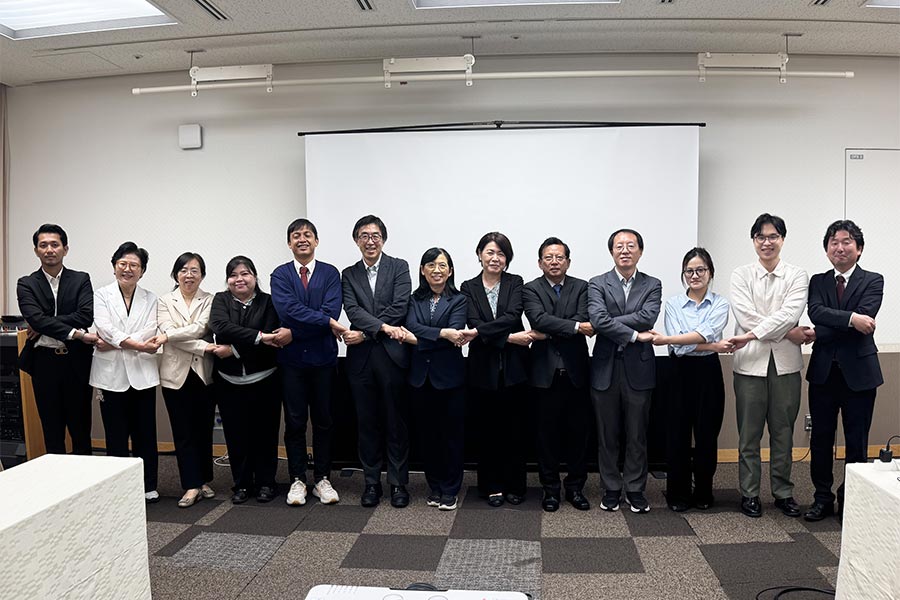





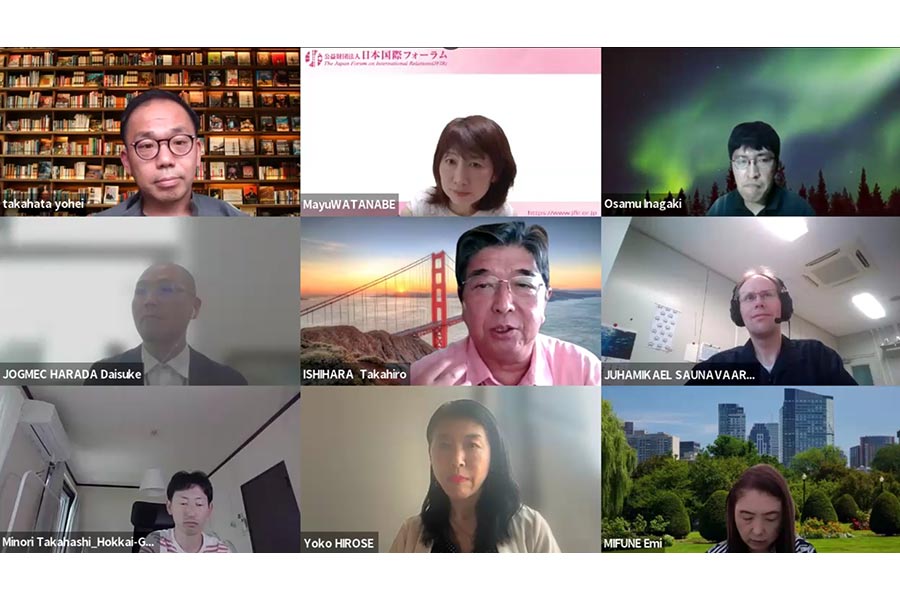
Back number
About JFIR
The Japan Forum on International Relations(JFIR) is a private, non-profit, independent, and non-partisan organization, which was established for the purpose of encouraging its members and the public at large to study, discuss, exchange and propose ideas on foreign policies and international affairs, thereby enlightening the public in and out of Japan. In doing so, however, JFIR as an institution neither takes nor rejects any specific political
positions on these matters. Though JFIR issues from time to time specific policy recommendations on important matters of the day, the responsibility for the contents of the recommendations concerned lies solely with those who sign them. JFIR was founded on March 12, 1987 in Tokyo and was reincorporated on April 1, 2011 as a “public interest foundation” with the authorization granted by the Prime Minister of Japan in recognition of its achievements.